The Discomfort Map
Some forms of discomfort stay vague for years. That vagueness is often what gives them power. Once you can see where discomfort actually shows up, you can work with it more deliberately.
Free PDF. No email gate. Print it or write on it digitally.
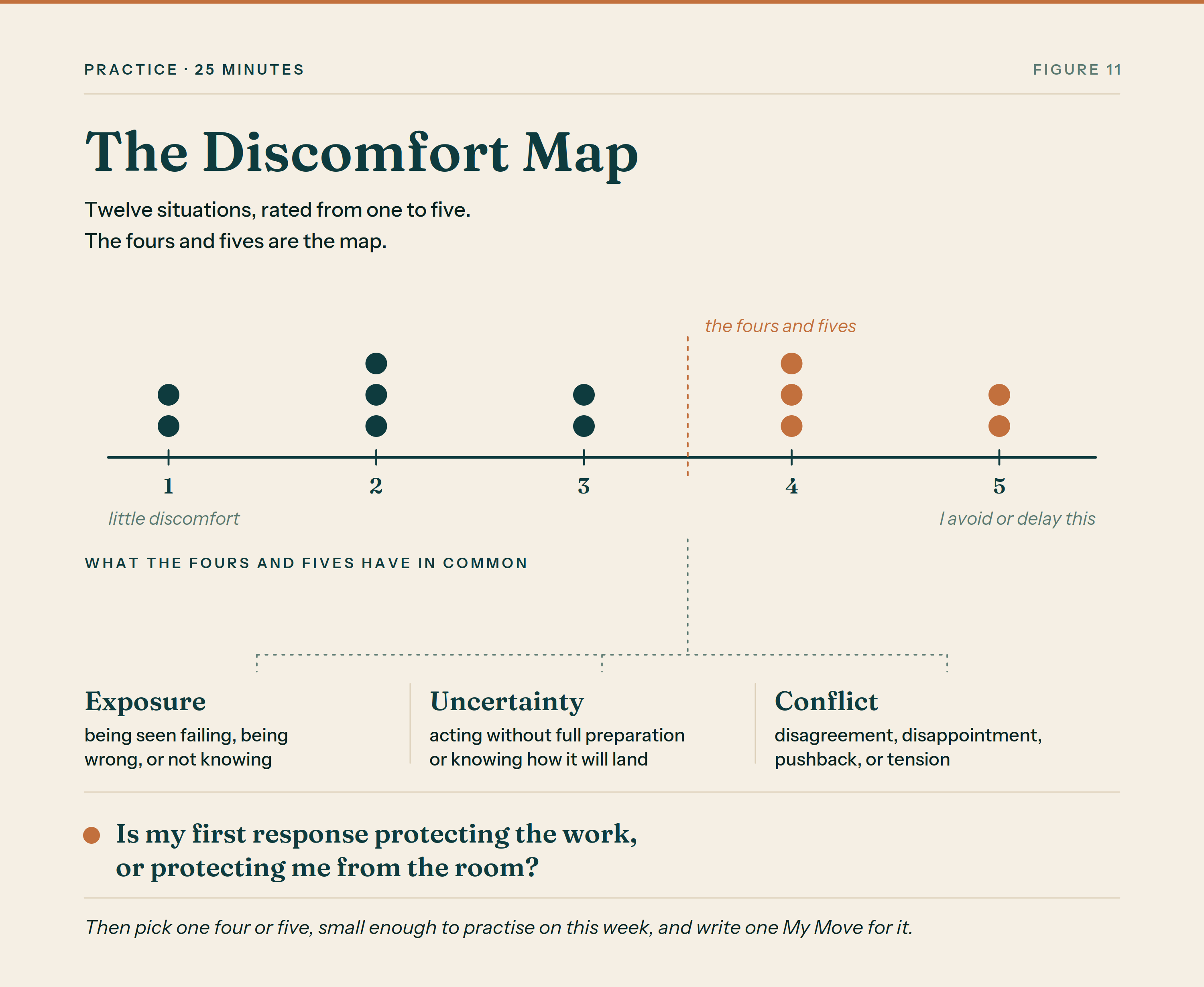
Four moves. One real situation.
Rate twelve professional situations from 1 to 5. A five is something you regularly avoid or delay.
Look for the pattern. Most discomfort clusters around exposure, uncertainty or conflict.
When discomfort appears, is your first response protecting the work, or protecting you from the room?
Pick one four or five, small enough to practise on this week. Preferably not the easiest.
Confidence often comes after the move.
The point is not to become fearless. It is to make discomfort specific enough that you can test one useful action before the feeling disappears.
One practice from a larger journey.
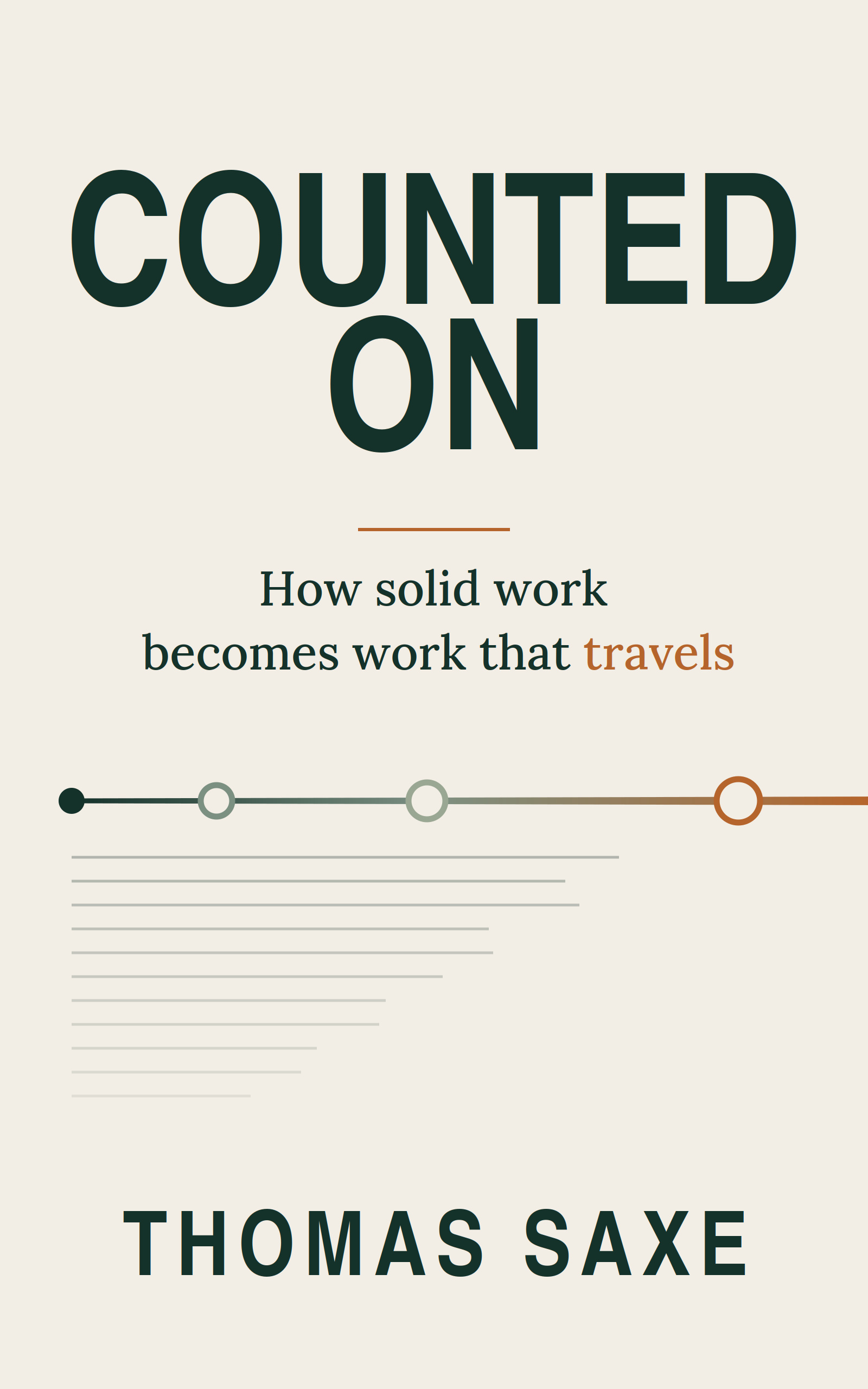
The Discomfort Map appears in Counted On, a forthcoming book about The Usability Gap: the distance between the value you bring and the value other people can actually use.
Counted On is for people who already do solid work and want it to become easier to trust, build on and carry forward. It is not a confidence book. It is a practical path for making work and judgment easier to understand, trust, use, build on and carry forward.
Career Shift Edition
The Discomfort Map now also exists as a Career Shift Edition for career change, job search, networking and interviews. It keeps the original practice and adapts the situations to the route people often avoid first.
Start with the original book version, or open the adapted version built for career shift conversations.
Want the one-page visual?
The worksheet is the version to use. The book figure is the compressed visual that explains the practice.